headline
How Elite Goalkeeper Coaches Structure An Effective Goalkeeper Pre-Season

Pre-season is a much less documented part of the football calendar. Welcome back videos will often be posted on the club’s social media, portraying a jovial ‘back-to-school’ atmosphere as everyone returns from their sun-soaked holidays. Hefty concentration is placed upon fitness as players recover from their well-deserved breaks, but what does the rest of the pre-season process involve for goalkeepers?
Michael Gspurning is Union Berlin’s Head of Goalkeeping and Goalkeeper Coach, playing an instrumental role in the club’s first-ever Bundesliga promotion in 2019 and Champions League qualification in 2023. These eye-catching achievements alerted Ralf Rangnick and the Austrian National Team to Gspurning’s talents, and he joined the side as the Goalkeeper Coach, alongside Union Berlin duties.
Gspurning is a firm believer that “preparation doesn’t begin with the first official training session, it starts during the off-season.” He places heightened importance on tracking and maintaining the goalkeeper’s condition.
“The players get time to recover mentally and physically,” Gspurning continued. “But they also receive individual programs to keep themselves in shape and address specific needs. It’s not just about aerobic running, it’s more about stabilising the body, correcting imbalances, and strengthening areas that are prone to overload. Ideally, they return feeling refreshed and more prepared than when they left.”
Gspurning says that “collaboration with other departments is a big priority” to monitor a goalkeeper’s fitness across the summer. He outlines that a “transdisciplinary approach,” involving various assistant coaches, each with a “specific area of expertise,” aids the process.
“For the summer break, the Head Athletic Coach defines the main program in exchange with the Individual Athletic Coach and my goalkeeper. After an exchange with the player, we implement possible additional exercises into their plan to give them self-responsibility.
“Before and during pre-season, we do a full strengths-and-weakness analysis, looking at injury history, physical screening, and technical tendencies.”
Gspurning articulates that it's of vital importance not to place goalkeepers under too much physical strain too quickly. “The adjustment to being on the pitch every day shouldn’t be underestimated,” he stressed. “Regularly, we start the pre-season with two days of conditioning drills, jumps and injury prevention tests.
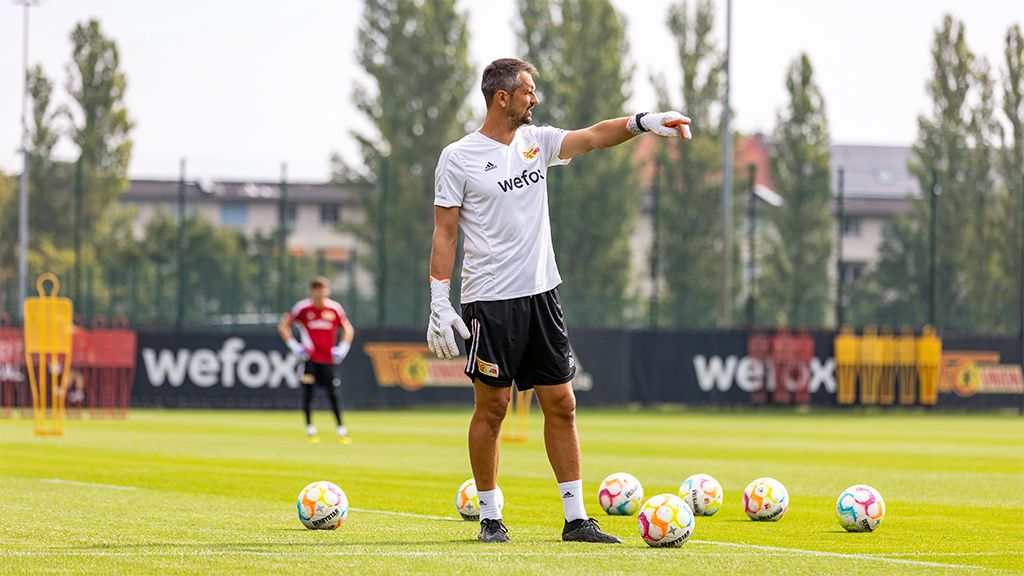
“I pay close attention to their movement and how their bodies react. We do a lot of goalkeeper-specific movements, but at moderate intensity. Also lots of touches with the ball, but without overloading the joints or muscles. We spread the heavier loads carefully throughout the period.
“We’re in constant dialogue with the athletic and medical departments. We monitor with GPS data, and most importantly, we listen to the goalkeepers themselves with a questionnaire they fill out every morning before practice. If there are any signs of overload, we adjust immediately.”
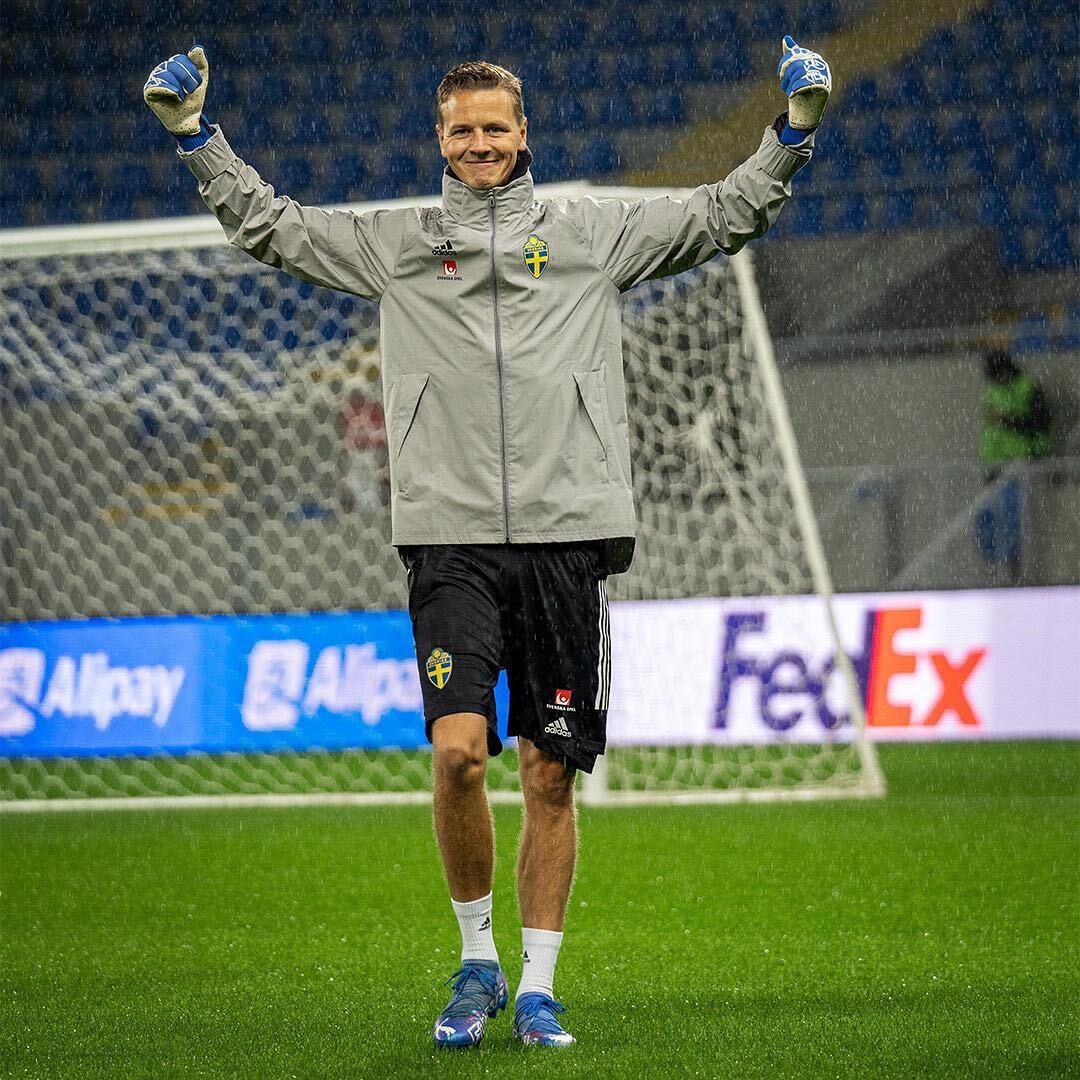
Maths Elfvendal has been the Swedish National Team Goalkeeper Coach for nine years and was previously at Parma in Italy. The Swede recently joined Goalkeeper.com as Head of the organisation’s Advisory Board. He is an integral member of a group of experts aiming to ensure the thriving future of goalkeepers through inspiration, support and data.
Elfvendal emphasises principles of collaboration and creating player-specific programs when devising a pre-season training schedule. “I believe in creating an individual program in collaboration with the Strength and Conditioning (SoC) coach,” he said. “It's also important to involve the goalkeeper. This ensures that he truly understands the program and its significance. The SoC coach can motivate the exercises, while the Goalkeeper Coach should explain how these will help the goalkeeper improve.
“It's a delicate balance because you need to push the goalkeeper to improve certain physical aspects. That's why it's crucial to have a well-structured plan for the long, medium and short term. This ensures that the goalkeeper can both train intensively and recover in the best possible way within the schedule.”
The concept of a thoroughly planned and specifically tailored pre-season training schedule is crucial for both coaches. Elfvendal theorises these necessities through two concepts, the “Individual Development Plan” (IDP) and the “Periodisation of Specialised Training framework” (PoST)
“We start by looking at the environment in which our goalkeeper will play. This requires a deep understanding of the leagues or tournaments they will participate in, as well as how team tactics will affect the situations the goalkeeper faces. For example, if the team uses a high man-to-man defence, the goalkeeper might encounter more one-on-one situations.
“You should also include an analysis from the previous season, considering the team's and goalkeeper's performance, along with the IDP you have created, which is organised into different levels. I use the PoST to determine not just when, but also how to help the goalkeeper improve.”
Gspurning abides by a similar methodology, outlining a six-week pre-season plan with one or two training camps that he follows in Germany, focusing on regaining rhythm, adapting to the daily load and tactical integration.
"I structure the six-week pre-season with a clear periodisation: short-term, mid-term, and long-term priorities,” he said. “The goal is to have a group of keepers who are physically stable, tactically integrated, and mentally ready to lead when matchday one arrives. I don’t believe that pre-season needs to be about building a year’s worth of fitness in six weeks.
“In the first week, I focus on reintroducing goalkeeper movements and rebuilding rhythm. Even though the players follow individual programs during the break, nothing replaces the specific movements, footwork, and decisions we practice on the pitch. It's all about reactivation. That means a lot of lateral work, coordination and ball-handling exercises to get them feeling like goalkeepers again. They come back quickly to the used rhythm again, where we focus heavily on game-related situations.”
After this, Gspurning delves into the player-specific plans, creating an individual profile: “We assess where they are physically, technically, and mentally, and we define clear goals. This will be crucial for planning the periodisation and the training framework itself. There are always team principles, and the goalkeepers have to be aligned with those from day one.”
Gspurning splits his pre-season goalkeeper training schedule into three elements that support each other. Firstly, he focuses on the technical and tactical aspects. “I try to include all aspects of the goalkeeper game, technique, tactics, physical work, and communication. If team tactics shift, maybe because the head coach introduces new pressing triggers or defensive concepts, then I’ll adjust my drills.”
Secondly, he strengthens physical attributes by developing a “tailored athletic plan” for each goalkeeper. “We have a clear weekly structure: one day focused on lower body strength and core, one for upper body and shoulder stability, and one day for individual needs.”
Lastly, Gspurning also views pre-season as a fantastic opportunity to form a collaborative goalkeeping unit and grow personalities.
“We use this period to define roles within the group, strengthen leadership behaviours, and build trust with the defensive line. By the end of the six weeks, there’s a real sense of excitement. Everyone’s looking forward to that first match and being fully ready when it counts.
“What I really value is that ideas also flow both ways. Sometimes I notice something in training, maybe an issue with push-off speed or power in certain save patterns, and we discuss how we can support that physically. That kind of collaboration is crucial. It’s a big part of why we’ve had such a low injury rate and steady development in our physical performance markers over the years.”
Elfvendal explained the integration for new goalkeeper signings heading into pre-season. “You need the best possible understanding of the goalkeeper you are signing,” he underlined.
“You need to create an IDP that outlines how, when, and how often you should conduct individual sessions. The plan should also detail what ‘focus points’ should be included in the goalkeeper group sessions and what should be integrated with the team.”
Gspurning also detailed how he handles this process: “It’s important to engage with new goalkeepers as early as possible, ideally even during the off-season. I’ll usually send them a welcome video that includes our team principles, expectations, and also some positive clips from their previous matches to reinforce what they do well. That helps set the tone.
“Once they arrive, I sit down with them and with the whole group. I always ask: What have you done in the past? What worked well for you? Where do you want to develop? These conversations give me valuable input for planning and help build trust. Getting to know each other, creating a connection: that’s the foundation for everything that follows.”
Long-form goalkeeping writing, delivered to your inbox. No spam. No outfield content. Just depth.
Tagged
Continue reading
‘Once you are a goalkeeper, and claim that first ball, it stays with you always…you stay with us all’.A goalkeeper is many things in the beautiful game of football, at every level of it. We can be both heroes and villains. Often both. Rarely neither. To be a goalkeeper is polarising - for better or for worse - but a polarising entity that football simply couldn’t live without. It is precisely this notion of ultimate reliance, but at the same time, inevitable misunderstanding from fans, players and pundits alike that make the position of the goalkeeper so unique. Goalkeepers form a footballing paradox. In January of 2022, Manchester City manager Pep Guardiola described the goalkeeper as ‘the most important position on the pitch’. Guardiola, himself something of a modern-goalkeeping revolutionary, echoes a sentiment that some wholeheartedly agree with, and others feel is up for debate.Guardiola went on to describe the goalkeeper as a ‘fundamental’ part of the team. The Spaniard’s choice of vocabulary perhaps couldn’t have been more precise, given that the actions of the goalkeeper - in defence, attack, in possession, and out of it - influence each and every player. We see the entire game, watching from afar but never disconnected. The principle of the ‘goalkeeper’ has existed in different parts of football’s lineage since the times of the Ancient Romans and Ancient Greeks, and ever since has played a fundamental role in a variety of ways, but one prevails: the prevention of victory for another. Over the course of its development, goalkeeping has been interpreted in another legitimate, if not perhaps disparaging, way: that we are, in essence, anti-footballers. Arguably, many goalkeepers would relish this fact. We ultimately set out to prevent the very thing that football fans want to see: goals. As one member of the goalkeeping community succinctly put, we get a thrill from ‘destroying strikers’ dreams’. But ultimately, however goalkeepers are viewed, Guardiola is right. The goalkeeper is perhaps the most important player in football, because although our main aim is to stop goals, we are also the very same reason why goals have meaning. Why victories mean something. Because, without the goalkeeper, nobody has been ‘beaten’, and therefore nobody has convincingly won. That’s why, simultaneously, the goalkeeper is the hero and the villain. The antagonist they can’t help but love. ‘The only thing that comes before goalkeeping for me is my family. It's been that way for 59 years now and will remain so, until I die. It is everything. You stand between success and failure for your team and put your body on the line to win that ball or keep it out of the net. There is no greater thrill’, says one member of the goalkeeping community on Facebook. The question that was being answered was ‘what does being a goalkeeper mean to you?’. The answers were diverse, but one common theme prevailed. Whereas those who have played football were ‘footballers’, playing in one main position during their career, goalkeepers were ‘goalkeepers’. It’s something that means more than a position on the pitch. To be a goalkeeper is an identity, and it’s lifelong.After all, in what other arena of life is an absent-minded coffee spill elevated to something of a character fault, related back to a junior sports position? Anybody who has stood between the sticks and has also suffered the drastic misfortune of dropping a pen in the office will be well-versed in reacting to the inevitable comment that’s to come from an eager colleague: “you’re meant to be a goalkeeper”. You can tell they’ve been waiting to use that line. Who doesn’t secretly love it? And that’s the beautiful thing about the motif of the ‘union’ - it’s true and it’s real. Everyone who has played in goal can probably relate to that solitary experience. Chuck in the biggest bag in the entire team, and a powerful urge to play up front in every five-a-side fixture you’ve found yourself involved in, and the collective image of the goalkeeper is true of its maverick reality. You see, membership to the goalkeepers’ union doesn’t expire, even if life takes us in different directions. Every reference to the hallowed turf of the penalty area brings back sweet-smelling (although not of damp goalkeeper gloves) memories. Some say your past sticks with you, but for a goalkeeper - at whatever level or age you donned the gloves - the identity of the goalkeeper is invisibly branded upon you. But to be a goalkeeper is also to undertake a very skilled profession. For those who have forged a career out of the position, it’s a life-shaping experience. Goalkeeping is a school of hard knocks; you’re forced to grow up quickly, especially psychologically. “I think, first and foremost, being a goalkeeper teaches you a lot of life lessons that you might not even realise at the time”, explains the ex-Watford and Brentford goalkeeper Richard Lee, who also hosts The Goalkeepers’ Union podcast. “With punditry being what it is, and still very little understanding of goalkeeping as a position, you need to have an incredibly resilient mindset. It teaches you a lot of skills that you have to use post-career in order to almost understand yourself emotionally. When you're constantly being criticised, questioned, and doubted, which you will be as a goalkeeper, you've got to adopt a unique approach”, he continues. Now involved in football both through the media and as an agent, Lee has seen many different sides of goalkeeping and goalkeepers. In a career full of fantastic highs, as well as some hard-hitting lows, the 39-year-old’s rather profound outlook on a life in goalkeeping is reflective in tone but ultimately practical: “probably the biggest thing goalkeeping has given me is an awareness of how to be as resilient as you possibly can be”. Resilience, unsurprisingly, is a topic that came up extensively in conversation with another ex-goalkeeper (are you ever really an ‘ex-goalkeeper’, though?). “It is a very important - and very stressful - position. If you’re going to be a successful team, you need to have a very good goalkeeper. Until you play professional competitive football, you don’t realise how much mistakes can matter”, says ex-Liverpool and Wigan Athletic (amongst others) shot-stopper Chris Kirkland. “Nowadays, you have to mentally be so strong. I wasn’t on social media when I played, but it can be a very poisonous place. If you are going to open yourself up to that, you’re going to get stick and you have to be able to deal with that. Kirkland has remained active in goalkeeping in retirement, working tirelessly to increase awareness surrounding mental health. Fully aware of the trials and tribulations of goalkeeping and the toll it can take mentally, his own views of the concept of the goalkeepers’ union epitomised the unique humanity of goalkeeping in a sport that can often be unforgiving for those who may falter. “It’s huge. It’s not a made up thing. I’ve had messages when I used to play, and I message goalkeepers now to support each other. I got that support when I played, and I want to pass it on. For me, it will never ever change”. As both Richard Lee and Chris Kirkland make clear, being a goalkeeper is a vice for learning. In this sense, the idea of the goalkeepers’ union is almost paternal. No matter what level a goalkeeper you are, or indeed how old, a symbolic connection exists between shot-stoppers far and wind. Some will argue that they are ‘born goalkeepers’. After all, defying gravity (and not just metaphorically) is a trait human beings don’t tend to acclimatise to. In this sense, goalkeeping almost becomes genetic. “I’ve always enjoyed watching Pat play, even if it’s with a knot in my stomach”, says Paul Warrington, speaking about his 16-year-old son, Pat. “Although I very rarely play at all these days, when I was a kid playing football, I only ever wanted to be a goalkeeper. Scoring goals didn’t interest me. Keeping the ball out did”. It hasn’t taken long to revisit the idea of the goalkeeper being the antagonist. There’s a certain vitality in being there to deny the very thing that people want to see at a football match: goals. Naturally, this isn’t doesn’t always rub fans up the right way. As far as learning experiences go, this was something new for Pat, who plays at a high level of grassroots football in age groups senior to his own.“He’s had to be very outgoing and show confidence. Obviously during the games he needed to be vocal and commanding but it’s not something you can just turn on. Without knowing it, he’s been developing his social skills from under 8’s onwards. One Under 18s match was a real eye opener. He was getting abuse from home fans gathered behind the goal. There were 10 or 15 of them, and for 90 minutes he had to put up with them, slating everything he did. “As his Dad, I just wanted to put an arm around his shoulder”. It’s probably fair to assume that we speak for most goalkeepers in saying that there’s a certain smugness in taking the behind-the-net jeers on the chest, before pulling off a mesmerising save and hearing them become slightly less opinionated and a lot more quiet. When it goes the other way, you know you’ll have the last laugh next time.“It’s difficult. I don’t think just anybody can be a keeper, mainly because of the pressure you can be under, compared to the rest of the team”, adds Pat. “Regardless of what team you have in front of you and how well (or not) they’re playing, you can still have an impact on what’s happening and affect the end result. “I think being a goalkeeper has made me be more outgoing away from football. It really is unique”, he continues. Learning and development has been a key part of Paul and Pat’s father/son relationship within goalkeeping. As Pat donned the gloves as little more than a nine-year-old, Paul decided the time was nigh to gain his coaching badges and avoid the fate of his son spending his developmental goalkeeping years without a specialist coach. Like his old man, Pat himself has already dabbled in coaching, but as he puts succinctly: “I still prefer playing”. In the Warrington family, goalkeeping is generational. The pitches at Norton Playing Fields in Sheffield, where Pat plays his home matches, are by no means of a bad standard for grassroots football, but the crowds seldom reach beyond parents and friends.About an hour and a half south-west sits West Bromwich Albion’s 26,000 seater stadium: The Hawthorns. The not long gone incumbent of its goalposts was a certain Sam Johnstone, wearing the Baggies’ number one shirt off a stellar debut Premier League season with a few England caps thrown in for good measure. Chris Kirkland earlier alluded to the ‘trial-by-fire’ nature of goalkeeping, and at the top the margins are fine between success and failure. The 2021/2022 season tested Johnstone, with periods out of the starting eleven and constant transfer rumours swirling after his excellent top flight run in 2020/21. Johnstone left the Baggies on a free transfer at the culmination of the campaign. Yet, for the 28-year-old, this is simply part and parcel of the game he loves. Of a position that he’s loved for 20 years. “I know it sounds a bit mad, but it’s my life. I don't know any different”, Johnstone remarks to Goalkeeper.com.“Of course, I love being a goalkeeper and I'm grateful to be lucky enough to be able to do it every single day at a high level. I still enjoy it after all these years”.“It's a high-pressure position”, he continues. “Over the years, you have to learn to cope with that. You become used to kind of blocking things out on the pitch. Then, when you come off the pitch, you become yourself again. Personally, I'm not as loud off the pitch”.“It's funny to think that you can play in front of 50,000, 60,000, 70,000 people and deal with the pressure and noise that comes with that. But then when I leave the pitch…well, I’m not someone that would like to do a speech or initiation songs!”. “And then, the final whistle goes, and you refocus. I go home to my family, and I’m a different person”.The goalkeeper’s psyche is unique. Yet, behind every presence in the penalty area is a human being. A skilled human being - resilient to an extreme - living the dream, on and off the pitch. But, as Johnstone is keen to stress, family is also an indisputably important part of his life. Being a member of the goalkeepers’ union, the concept of the family transcends the work/life boundary. To be a goalkeeper is to be in it together. “It's something that I always enjoyed as a kid, being a goalkeeper, which is supposed to be unusual when you play football. You’re within a team, but you are also quite isolated. It's quite a tough position to play, but it can be hugely rewarding”, Birmingham City Women’s goalkeeper, Emily Ramsey, tells Goalkeeper.com.Ramsey, 21, is on loan at the Blues from Manchester United. United reformed their women’s football structure in 2018, with Ramsey one of several players who made the move to the new-look Red Devils. Alongside ex-England international Siobhan Chamberlain, she moved from Merseyside to Manchester, making the move from Liverpool that year. Her route into goalkeeping is arguably uncommon. Some do fall in love with the position from the beginning - how or why, she acknowledged, was unknown at the time. Others, however, find themselves in goal, literally and figuratively. “Hugely rewarding” indeed, Ramsey’s sentiment adds another adjective to the list of ways to describe football’s most misunderstood position. “Obviously, you work in really small groups every day in training so you have quite close bonds and connections with those that you train with you working with. In games, however, I enjoy the challenge of facing and being able to defy another team. It’s a ‘they're not going to be able to score past me’ mentality. It’s mentally challenging to be a goalkeeper, but I enjoy that”, she continues. If goalkeeping itself is misunderstood, women’s goalkeeping, arguably, is almost stigmatised. In February 2020, ex-England boss Fabio Capello made the headlines for opining that the goals in women’s football should be made smaller. Capello had compared the matter to the smaller nets used in volleyball and basketball. Chelsea Women’s manager Emma Hayes had also referenced the size of goals in the female game a year earlier; Capello’s comments were rebuked by Ramsey’s ex-teammate Chamberlain. But, for Ramsey, this theory doesn’t stand up - and not just on the basis of principle.“Well, no, the goals shouldn’t be smaller, because that's a game of football. There are definitely differences between female goalkeepers and male goalkeepers, but it’s a different challenge. With women, you get different body types and therefore different kinds of goalkeepers. You can get shorter goalkeepers who are super powerful and can jump really high, or you can get somebody like me; a tall goalkeeper where I can use my physique on crosses or covering the goal”, she explained.“Remember, men hit the ball faster than women. So we have more reaction time to see the ball. I just think it comes with different challenges, and you tend to see women having to be a bit more technical rather than physical, in my opinion”. Whilst differences may exist in the technical and physical makeup of the women’s game, it’s undoubted that the same quirky passion for the game exists in women’s and men’s goalkeeping alike. And, after all, why wouldn’t it? If it’s there in youth, professionals, those retired and anybody else who’s stood in the rain and the mud, loving every minute of it, why would it be any different? With a new, capable set of faces at the round table of goalkeepers, we all have even more opportunities to learn, adapt, and develop. What does being a goalkeeper mean to you? That’s the question we put to all who contributed to this article. Pre-empting the blurb of Jonathan Wilson’s ‘The Outsider’ - a definitive history of the goalkeeper - is a quote by author Vladimir Nabokov. Yes, the author of Lolita played in goal. The troupe of the other, a theme common in literature, is encapsulated in Wilson’s book via a range of quirky stories. It’s well worth a read. Yet, it’s that one quote from Nabokov that really hits home. It evokes the same feelings as the rush of smothering a ball at a striker’s feet. Of the biting wind and rain hitting your face - alone, and muddy - but loving every minute. Of the thrill of saving a penalty, the champion’s smile at the despairing taker, and the inevitability of conceding from the resulting corner.Of the sweet smell of fresh gloves, and the slightly less sweet - but almost weirdly comforting - smell of the old ones. A poignancy. The knowledge that being a goalkeeper has become part of your identity. It lives within you. To be a goalkeeper means something more.‘Aloof, solitary, impassive, the crack goalie is followed in the streets by entranced small boys. He vies with the matador and the flying aces, an object of thrilled adulation. He is the lone eagle, the man of mystery, the last defender’.
The Month of gLove continues as AB1 partners with Goalkeeper.com.A new week brings a new brand to the Goalkeeper.com Marketplace.We're proud to be partnering with AB1 GK, who will join the Marketplace upon its launch in the coming weeks. Publicly headed by Everton goalkeeper Asmir Begovic, AB1 burst onto the scene in 2019 and have become one of the world's fastest growing goalkeeper glove brands. Founded out of the Asmir Begovic Goalkeeper Academies, where young goalkeepers would often ask Asmir for advice on which gloves to buy, AB1 now sports a range of top level ambassadors including Manchester United's Tom Heaton (who has his own range with the brand), Begovic himself, Manchester City Women's Sandy MacIver, Torino's Vanja Milinković-Savić and England goalkeeper coach Martyn Margetson. You can learn more about the origins of AB1 in our Behind the Brands exclusive with Begovic here.Goalkeeper.com will support AB1's commercial efforts in a wider capacity as they join the Marketplace, in-keeping with our multi-benefit partnership programme for brands. To find out more about joining the Goalkeeper.com Marketplace, email brands@goalkeeper.com. To keep up to date with further announcements as we get closer to our Marketplace and Lifetime Membership Programme launches, use the form below and stay in-the-know as the Month of gLove continues.
Both the red and blue halves of Manchester brought in new number ones on deadline day. What do the moves reveal about changing club approaches in the north? Manchester worships football. Its streets, parks, cafés, pubs, and offices are threaded with the same stories of triumph, mistakes, and drama that define the game. Over the years, the city has witnessed title races that grip the nation, managerial overhauls that make headlines, and transfers that shift the balance of power. Rarely, though, does a single week reshape not just a team or a club, but the entire city’s approach to the game’s most unforgiving role: the goalkeeper.As a city, Manchester has always been obsessed with goalkeepers, and a revolving door of big names and greats have passed through its posts. From Peter Schmeichel’s snarling dominance to David de Gea’s spider-limbed heroics, from Edwin van der Sar’s calm assurance to Joe Hart’s spectacular shot-stopping, the man between the sticks has often defined the story of its two clubs. United fans have seen Fabien Barthez’s outré flair and unpredictability, Tim Howard’s flashes of brilliance, and a conveyor belt of hopefuls, while City’s history includes David James’ eccentric charisma, Bert Trautmann’s broken neck, and even a brief spell for Arsenal legend David Seaman. Across Manchester, goalkeepers have shaped seasons, lifted trophies, and carried the weight of expectation.In a flurry of deals that closed the summer window, City waved goodbye to Ederson, the man who redefined goalkeeping in England, while welcoming Gianluigi Donnarumma in a deal that promises a new era at the Etihad. Across town, United quietly reshaped their own plans with the signing of Senne Lammens - a move that somewhat slipped under the radar by comparison but may prove just as significant.This wasn’t just run of the mill transfer deadline day drama. It was a hard reset for two clubs who have spent the last decade shaping the country’s conversation around goalkeepers.Ederson’s £25m move to Fenerbahçe caught many off guard. At 31, he still looked every inch the modern goalkeeper: calm under pressure, razor-sharp in possession, and a decent shot-stopper who perfectly embodies Guardiola’s gospel of risk and reward. Yet, after eight trophy-laden seasons - six Premier League titles, two FA Cups, four League Cups, and the long-awaited Champions League in 2023 - this was as much about timing as it was about talent.City’s dominance over the last decade wasn’t just built on De Bruyne’s artistry or Haaland’s goals; it started at the back. Ederson was Guardiola’s enabler, turning the penalty box into a playmaking hub. His lackadaisical line-breaking passes became so frequent and precise that what was once considered spectacular became expected, while opponents were forced to press high and leave dangerous gaps behind. For better or worse, depending on which side of the debate you sit, he redefined goalkeeping in England—not just inspiring, but compelling a generation of goalkeepers to sharpen their passing game.Ederson made seven Premier League assists, a record for a goalkeeper 🤝@ManCity's six-time champion leaves after eight years to join Fenerbahce pic.twitter.com/wtxxaVg2Ai— Premier League (@premierleague) September 2, 2025 But football moves fast, and rarely faster than at Guardiola’s City. For all their success, the club is defined by evolution. Seen through that lens, Ederson’s farewell feels less like a shock and more like the conclusion of a carefully mapped cycle a calculated pivot before complacency had the chance to set in. Over the last few seasons, questions had been raised over Ederson's shot-stopping, and City's uncharacteristic poor spell of form last season suggested that Guardiola's golden side perhaps needed a reboot across the park. All good things must come to an end. Enter Gianluigi Donnarumma. At 26, he’s already played more than 400 senior games, won the Euros with Italy, and developed a reputation as a once-in-a-generation shot-stopper. Yet, his three-year spell at PSG was far from flawless. In Paris, his brilliance was often undercut by high-profile errors and the club’s tactical inconsistencies. In Manchester, he arrives not just to replace Ederson, but to reinvent himself.City paid a relatively modest £26 million for Donnarumma, modest by their standards and by the fees the Premier League has recently seen for goalkeepers, which highlights the unusual nature of this deal. Even more unusual was the style of Donnarumma's exit from PSG - something he clearly wasn't expecting, judging by his farewell remarks on Instagram. Unlike Ederson, Donnarumma is no quarterback in gloves. He’s a towering presence, a more traditional goalkeeper who thrives on reflex saves and dominance in the box. For a team that has spent years stretching the pitch vertically through Ederson’s distribution, his arrival could signal a subtle shift.Guardiola, who has reinvented City’s midfield and forward lines countless times, now faces a new tactical challenge: can his side maintain their passing rhythm without the most gifted distributor in goalkeeping history? Or is this the beginning of a more pragmatic City, one that places defensive stability over audacious risk-taking at the back? Well, Donnarumma himself knows he may have to adapt. ‘I always try to help the team and do what the coach asks of me. I do everything; you can always improve in everything, but regarding what the coach asks of me, I try to improve,’ he said at Italy's training camp on Wednesday. 'I'm sure that with Guardiola we'll do a great job.'City’s goalkeeping depth makes this story even more intriguing. Stefan Ortega, Ederson’s deputy, has impressed in almost every opportunity, while James Trafford, recently bought back from Burnley, represents another pathway Guardiola could pursue. In Trafford's case especially, it's probable that he'll be catapulted forward by working with a goalkeeper of Donnarumma's stature. But would he not have gained similar from Ederson? With three top-class options and a coach who relishes competition, Donnarumma might not simply be handed the shirt. This evolution has an edge to it, there will be no guarantees, no comfort zones, only constant competition. How this will affect stability and consistency at the back remains to be seen, because in the Italian's mind, he'll be here to play, after signing permanently. That means that Trafford could find himself out of the team as quickly as he worked himself into it. There we have it - City capture the Italian giant ✍️What do you think of Donnarumma’s move to Manchester? 🇮🇹MCFC pic.twitter.com/5YXR06pg8O— Goalkeeper.com (@goalkeepercom) September 2, 2025 Perhaps the analysis needs simplification. Donnarumma is world class, and has proven it. How could City not bring him to the Etihad? While City stole headlines on deadline day, United worked on two long-running negotiations, with few knowing who - if anyone - was really about to move to Old Trafford. The Red Devils secured eventually secured Senne Lammens from Royal Antwerp for around £18m; only a few days earlier, the BBC had reported that no goalkeeper business was expected at Old Trafford. Since Sir Alex Ferguson’s retirement, United’s goalkeeping narrative has been one of extremes. David de Gea’s heroics masked systemic problems, Dean Henderson was anointed too early, and Andre Onana’s time at the club has been turbulent to say the least, marked by a litany of high-profile mistakes and intense scrutiny from all angles. Lammens represents something different: a calculated investment in a 23-year-old with enormous upside, acquired before the market inflates further.Lammens may or may not dislodge Onana or Altay Bayandir immediately, but his arrival signals a philosophical shift. Under Amorim and the club’s new sporting structure, United are prioritising patience over panic buys and quick fixes, building depth and competition into a position that has long been a source of instability. Lammen's capture certainly was a protracted process, with interest first reported early in the summer. Amorim seemed to want to give his current options as much of a chance as possible. The media storm following Bayandir's performance against Arsenal on the opening wekeend meant that chance last less than ninety minutes. For the last decade, Manchester has been the epicentre of European goalkeeping evolution. De Gea, at his peak, was a reactionary genius who kept United afloat. Ederson, meanwhile, turned passing into a goalkeeper’s primary weapon. Both clubs have shaped global conversations about what a modern goalkeeper should be, often in contrast with one another. Senne Lammens it is for Manchester United ✍️Emi Martinez was close, De Gea’s name was thrown around, and others flitted in and out of the news beat over the summer.Thoughts on Lammens signing? 🧤Some musings from earlier in the window - https://t.co/mZ46u41Y7F 🔗 pic.twitter.com/Eej2QrxoNz— Goalkeeper.com (@goalkeepercom) September 3, 2025 This week’s transfers suggest a new chapter, and the contrasts between the two approaches could not be sharper. City’s decision to replace a sweeper-keeper with generational passing range for a more traditional shot-stopper is a gamble that could reshape Guardiola’s system, testing whether their intricate build-from-the-back style bends or breaks without Ederson’s composure and precision. United, meanwhile, have added a young goalkeeper as cover and competition rather than rushing to displace André Onana with another big name after a turbulent couple of seasons. There was a case to be made, however, that a big name may have been what United needed to steady the ship in the short term. If Lammens does go in as number one, it remains to be seen whether he'll sink or swim under the pressure of the jersey. Even the fees tell a story. City’s £26 million investment in Donnarumma is almost identical to the price they paid for Ederson in 2017, a fee that feels like a bargain for a player who could become the Premier League’s dominant No.1 (or No. 99 in his case), while United’s £18 million outlay for Lammens reflects ambition tempered with long-term planning. Both moves encapsulate their clubs’ identities: City as a relentless machine, constantly rebuilding and reinventing, and United as a team still reconstructing its foundations, prioritising sustainability over spectacle.The immediate temptation is to crown winners and losers of the window. Donnarumma’s unveiling and Ederson’s farewell will dominate the news cycle. But goalkeeping legacies aren’t written in reactionary press releases.If anything, this week is a reminder that Manchester’s two clubs are never static. The next chapter in Manchester’s rivalry might not be written by Haaland or Cunah, Cherki or Fernandes, but by the players who stand behind them, the ones whose mistakes and miracles shape entire seasons.For now, all eyes are on Manchester’s goalkeepers, just as they have been for decades. This week’s moves haven’t just reshaped two squads, but reminded everyone how much the men at the back can define a season. In a city obsessed with football, this summer’s upheaval has shown once again that when it comes to keepers, Manchester always demands to be part of the conversation.
All the goalkeeper transfer rumours and deals on summer 2025's transfer deadline day.All reports are directly summarised from the original source, credited. JOE BURSIK - Portsmouth - CONFIRMEDPortsmouth AFC: Pompey have signed 25-year-old goalkeeper Josef Bursik from Club Brugge for an undisclosed fee. The former England youth international – who has represented his country up to under-21 level – has agreed a two-year deal with the club.Blues boss John Mousinho said: “He’s someone who showed a lot of promise as a youngster and has played plenty of Championship games. He really bolsters the options we’ve got in the goalkeeping department and is a target that’s been in our sights for a while now, so we’re delighted to get the deal done.”ABDULLA AL-HAMMADI - Manchester United - INTEREST ENDEDManchester Evening News: Abdulla Al-Hammadi has been on trial at Carrington for over a month now. United gave serious consideration to signing him as a training goalkeeper and the player was under the impression he would be offered a deal, but the final decision has been made not to offer him a contract.RUBEN BLANCO - Olympique de Marseille - RUMOURLuca Bendoni/Sky Sports: OM goalkeeper Ruben Blanco is assessing options with Serie A side Girona interested. ILLAN MESLIER - FC Lorient - RUMOURThe Times: Leeds United goalkeeper Illan Meslier could return to former club Lorient today. The French club are in talks about a move, however a decision on his future destination is still to be decided. Valencia are also thought to hold an interest in the 25 year old. CHARLIE CASPER - Grimsby Town - STRONG REPORTSLuca Bendoni/Sky Sports: Young Burnley goalkeeper Charlie Casper is set to join Grimsby Town on loan. EMILIANO MARTINEZ - Manchester United - INTEREST ENDEDBBC Sport/Sky Sports: According to Sky Sports, Emi Martinez has been keen on a move to Old Trafford after Unai Emery confirmed Marco Bizot as Aston Villa's new number one for the season. However, with a move for Senne Lammens now confirmed, Martinez will not be joining Ruben Amorim's side. SENNE LAMMENS - Manchester United - CONFIRMEDBBC Sport: Manchester United have agreed a deal to sign Belgian goalkeeper Senne Lammens from Royal Antwerp for an initial 21m euros (£18.1m) plus add-ons.Lammens, 23, is travelling to Manchester to sign a five-year contract at the Old Trafford club.Lammens joined Antwerp on a free transfer from Club Brugge in 2023, going on to make 64 appearances for Antwerp and winning the Belgian Super Cup in 2023.The Belgian youth international is yet to make an appearance for the country's senior team but received his first call-up in March 2025 and is seen as long-term replacement for Thibaut Courtois.EDERSON MORAES - Fenerbahce - STRONG REPORTSThe Athletic: Manchester City are ready to sanction an exit for Ederson — if they sign Gianluigi Donnarumma as his replacement. Brazil international Ederson is a target for Fenerbahce in a potential deal worth around €14million (£12.1m) over the closing hours of the summer window.Ederson joined City in June 2017 in a £35million transfer from Portuguese side Benfica. He has made 372 appearances for the club, keeping 168 clean sheets.GIANLUIGI DONNARUMMA - Manchester City - STRONG REPORTSSky Sports: The club are increasingly confident of agreeing terms with the player, with the framework of a deal between the clubs agreed in principle. There is still work to do, however, and anything can happen on Deadline Day. In turn, Fenerbahce are getting closer to agreeing a deal to sign Ederson.This report has also been validated by David Ornstein and The Athletic.